Creative Biolabs is offering the most comprehensive services for antibody development projects. With strict regulation and effective execution, we are dedicated to providing the most valuable solutions to complete your projects.
HighlightsCreative Biolabs is offering the most comprehensive services for antibody development projects. With strict regulation and effective execution, we are dedicated to providing the most valuable solutions to complete your projects.
HighlightsCreative Biolabs has established a broad range of platforms for developing novel antibodies or equivalents. These cutting-edge technologies enable our scientists to meet your demands from different aspects and tailor the most appropriate solution that contributes to the success of your projects.
HighlightsWith deep understanding in antibody-related realms and extensive project experience, Creative Biolabs offers a variety of references to help you learn more about our capacities and achievements, including infographic, flyer, case study, peer-reviewed publications, and all kinds of knowledge that can assist your projects. You are also welcome to contact us directly for more specific solutions.
HighlightsGet a real taste of Creative Biolabs, one of the most professional custom service providers in the world. We are committed to providing highly customized comprehensive solutions with the best quality to advance your projects.
HighlightsFor over two decades, Creative Biolabs has stood at the forefront of antibody engineering and discovery. We understand that a high-quality monoclonal antibody (mAb) is not just a reagent; it's the critical foundation for groundbreaking research, diagnostic development, and therapeutic innovation. Our comprehensive Monoclonal Antibody Discovery Services offer an integrated, end-to-end solution, moving from antigen design to fully characterized, production-ready antibodies. We combine classic, robust methods with cutting-edge platforms, specializing in phage display-based Monoclonal Antibody Discovery utilizing highly diverse immune antibody libraries. This synergistic approach empowers us to isolate rare binders, target challenging antigens, and deliver antibodies with unparalleled affinity and specificity.
While traditional hybridoma technology remains a valuable tool, the landscape of antibody discovery has been revolutionized by in vitro display technologies. At Creative Biolabs, our flagship service leverages the immense power of phage display combined with the biological relevance of an immune antibody library.
This strategy uniquely captures the "best of both worlds":
This specific strategy, constructing and screening immune antibody library via phage display, is the gold standard for projects demanding antibodies with picomolar to low-nanomolar affinities, especially against difficult targets that fail in traditional hybridoma fusions.
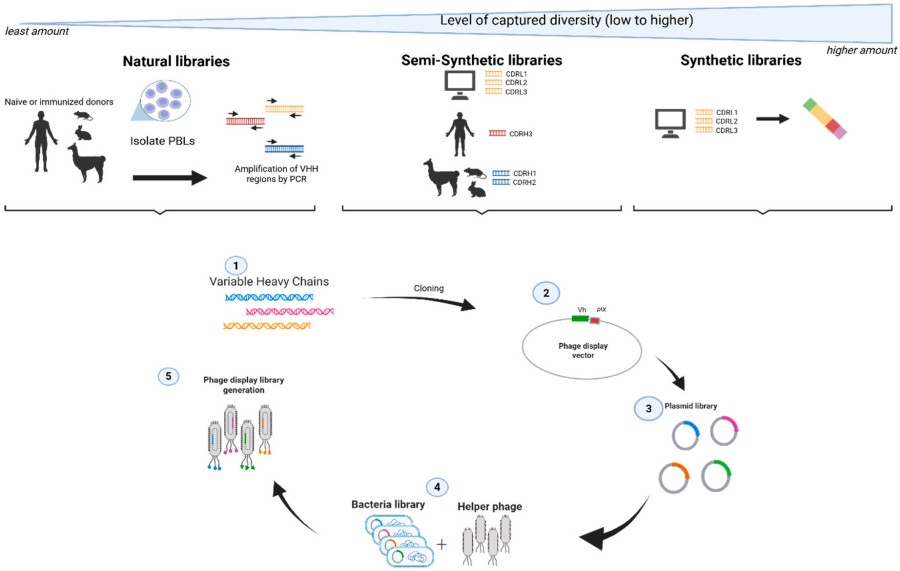 Fig. 1 Profile of different antibody phage libraries.1
We operate as an extension of your team, providing complete transparency and expert consultation at every project phase.
Success begins with the antigen. Our PhD-level specialists collaborate with you to design the optimal immunogen strategy.
This is where our technical expertise in phage display-based Monoclonal Antibody Discovery shines.
Tissue Harvest: We harvest spleen, lymph nodes, or PBMCs from the hyper-immunized host.
Target Immobilization: Your antigen is immobilized on a solid support or used in-solution for cell-based panning.
Post-panning, we identify and validate the most promising antibody candidates.
A validated hit is just the beginning. We convert your lead candidates into research-ready tools.
Choosing Creative Biolabs' immune antibody library for Monoclonal Antibody Discovery provides distinct, tangible advantages for your project.
| Advantage | Description | Impact on Your Research |
| Superior Affinity | Harnesses in vivo somatic hypermutation, providing antibodies that are often 10- to 100-fold higher in affinity than those from naïve libraries. | Reduces the amount of antibody needed in assays, improves signal-to-noise ratio, and provides a better starting point for therapeutics. |
| Exceptional Specificity | The immune system naturally selects against self-reactive clones, leading to highly specific antibodies with minimal off-target binding. | Ensures reliable and reproducible data in complex biological samples (e.g., IHC, flow cytometry) and reduces risk in diagnostic development. |
| Unmatched Diversity | Our expertise in immune antibody library construction ensures the full V-gene repertoire is captured, providing access to a vast pool of unique binders. | Increases the likelihood of finding rare epitopes or antibodies with specific functional properties (e.g., neutralizing, activating). |
| Speed & Efficiency | Bypasses the time-consuming and inefficient steps of hybridoma fusion, cloning, and screening. Biopanning is rapid and highly efficient. | Accelerates your project timeline, moving from immunization to validated hits in a matter of weeks, not months. |
| Species Versatility | We are not limited to mice. We can construct libraries from rabbits (for superior affinity), chickens (for divergent epitopes), llamas (VHH), and more. | Provides access to the ideal host species for your specific antigen, unlocking novel antibody formats and properties. |
| Difficult Target Success | Phage display allows for screening against toxic, non-immunogenic, or membrane-bound proteins (like GPCRs) in their native conformation. | Enables discovery projects that are impossible with hybridoma technology, opening new avenues of research. |
While we specialize in phage display immune antibody library development, we recognize that no single platform is perfect for every project. As your discovery partner, we provide access to a comprehensive suite of technologies, ensuring we select the right tool for your specific goal.
| Platform | Typical Affinity | Key Advantage | Best For |
| Phage Display (Immune Library) | Picomolar to Nanomolar | In vivo maturation + in vitro screening. | High-affinity therapeutic/diagnostic leads; difficult targets. |
| Phage Display (Naïve/Synthetic) | Nanomolar to Micromolar | No immunization needed; rapid screening. | Projects with toxic or non-immunogenic antigens; human antibodies. |
| Hybridoma Technology | Nanomolar | Generates a stable, immortal cell line. | Classic research reagents (WB, ELISA); generating mouse mAbs. |
| Single B-Cell Discovery | Picomolar to Nanomolar | Preserves natural heavy/light chain pairing. | Rapid discovery from human/animal donors; functional screening. |
Our Monoclonal Antibody Generation from Various Immunized Antibody Libraries Services:
Partner with the experts. Let our 20+ years of experience in Monoclonal Antibody Discovery accelerate your research. Contact our specialist team today for a confidential discussion and a detailed project proposal.
Q: What is Monoclonal Antibody Discovery?
A: Monoclonal Antibody Discovery is the process of identifying and isolating a single B-cell clone that produces an antibody of a single specificity (a monoclonal antibody). This process can be achieved through several methods, including hybridoma technology, single B-cell platforms, and phage display-based Monoclonal Antibody Discovery.
Q: Why use a phage display immune antibody library instead of hybridoma?
A: A phage display immune antibody library offers several key advantages. It allows for the screening of a much larger (>$10^9$) pool of candidates than hybridoma fusion. It also harnesses the power of in vivo affinity maturation, often resulting in higher-affinity antibodies. Furthermore, the in vitro screening process is faster and can be tailored to isolate antibodies against difficult targets (e.g., toxic) that are not feasible with animal-based hybridoma screening.
Q: What is the process for constructing and screening an immune antibody library via phage display?
A: The process begins with immunizing an animal (e.g., rabbit, mouse, alpaca) to generate a strong immune response. B-cells are then harvested, and their antibody V-genes are PCR-amplified to create a cDNA library. This "library" of genes is cloned into a phagemid vector, which displays the antibody fragment (like an scFv) on the surface of a phage. This entire collection of phages is then "panned" against the target antigen, allowing for the selection and enrichment of high-affinity binders over several rounds.
Q: What is the typical affinity of antibodies from an immune antibody library for Monoclonal Antibody Discovery?
A: Because the immune antibody library is built from a pre-selected, affinity-matured repertoire, the antibodies discovered often have very high affinities, typically in the low-nanomolar (1-10 nM) to picomolar (pM) range. This is generally superior to affinities obtained from naïve libraries.
Q: Can you discover human monoclonal antibodies?
A: Yes. We can construct an immune antibody library from human donors (if available) who have been exposed to a specific antigen. Alternatively, we offer premier services using our human naïve antibody libraries or by performing antibody humanization on a lead candidate (e.g., murine or rabbit) discovered through our service.
All listed services and products are For Research Use Only. Do Not use in any diagnostic or therapeutic applications.